
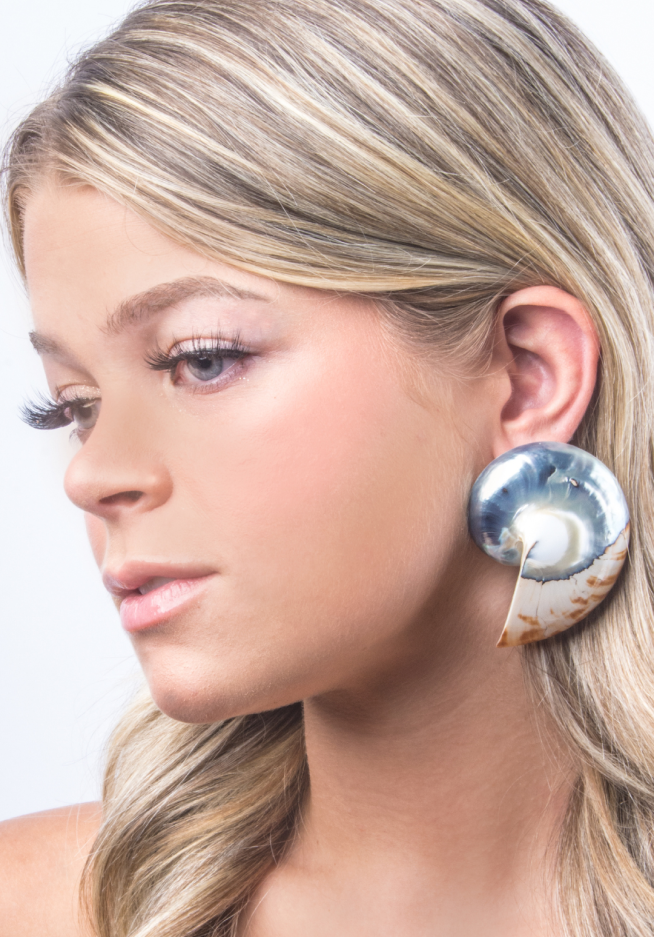




Vintage jewelry with actual historical weight is an immediate yes. But “vintage Taxco silver” covers eighty years, hundreds of workshops, and a lot of pieces that were never made in Taxco at all. The marks on the back are how you tell them apart. Here is how we read them.

Why Taxco
Taxco is a silver-mining town in the mountains of Guerrero, Mexico. In 1931 an American architect named William Spratling opened a workshop there and began translating pre-Columbian and organic forms into silver jewelry with clean, modern lines. Within a decade Taxco silver was an internationally collected design language, and the workshops Spratling trained — Los Castillo, Héctor Aguilar, Margot de Taxco, Antonio Pineda — each developed a voice of their own.

Long before Lily Frank had a name, Mexico was part of the story: our designer is half Mexican, with family roots among the silver miners of Batopilas in the Copper Canyon. That connection is why the Vintage Collection exists, and why we look for weight, patina, hand-worked surfaces, and unapologetic scale.
The marks, in order of what they tell you
1. The maker’s mark
The signature or symbol of the workshop. On a Spratling piece this is usually one of two things: the circular WS Print hallmark, or the oval “Spratling Silver” stamp. Sometimes both, one on each earring. Margot de Taxco pieces carry her name in a distinctive script. Los Castillo, Aguilar and Pineda each have their own.
A maker’s mark is the single most important thing on the piece. It is also the most faked, which is why it should never be read alone.
2. The silver standard
“925” or “Sterling” means 92.5% silver. Older Taxco pieces sometimes read “980” — a higher, softer standard Spratling favoured in his first years. A 980 mark on a Spratling design is a strong signal of an early piece.
3. The eagle
From roughly 1948 to 1979, Mexican silver exported abroad was stamped with a small eagle assay mark, usually with a number inside it identifying the city or workshop. No eagle on a piece with a 1940s maker’s mark is consistent with the date. An eagle on a piece claimed to be from 1942 is a problem.
4. “Taxco” and “Mexico”
Location stamps. Useful, but they were in use for decades and appear on tourist-grade silver as well as on the important workshops. Treat them as confirmation, not evidence.
Reading a real pair: our Spratling nautilus earrings
Our Vintage William Spratling Silver Nautilus Shell Earrings carry two period marks: the circular WS Print hallmark, used around 1940–1946, and the oval “Spratling Silver” mark, used around 1940–1944. The overlap places them in 1940–1944 — Spratling’s celebrated first design period. No eagle, which is exactly right for that date. Original screw backs, which is exactly right for that decade.

Margot de Taxco, and why women’s workshops matter
Margot van Voorhies was the principal early designer at Los Castillo before establishing her own Margot de Taxco workshop in 1948 — at a time when the major talleres were overwhelmingly led by men. Her language was lyrical, feminine and precise, drawing on pre-Columbian forms, Art Deco, Art Nouveau and Japanese art. A Margot shell brooch from 1950–1955 is coastal in subject and unmistakably Modernist in execution, and her mark on the back is what separates it from the thousands of shell pieces made in Taxco since.
What the surface tells you

Authentic vintage silver should look like it has lived a life. Dark patina settles into every recess of a hand-worked surface and brings the relief forward; a cast reproduction has none of that depth because there are no recesses to hold it. Weight is the other tell — a real 1940s pair like our Large Vintage Scallop Shell Earrings is solid, and feels it.
Any subtle surface character is part of the story. We do not polish it out.
The fittings
Screw backs are the original 1940s–50s construction and appear on most of our earliest pieces. They sit close, they suit non-pierced ears, and they are one more date marker: a pair with a maker’s mark from 1942 and modern butterfly posts has been altered. We leave original fittings in place unless a client asks otherwise.

A short checklist
- Maker’s mark present and consistent with the design vocabulary.
- Silver standard stamped (925, Sterling, or 980 for early pieces).
- Eagle mark present only if the piece dates from about 1948–1979.
- Original fittings, or an honest note that they were replaced.
- Patina in the recesses, weight in the hand.
Every piece in our Vintage Collection is one of one, sourced from estate collections, and dated the way described above. When a pair is gone, it is gone — which is the point.